Training Achievements “The Art of Communication for Collaboration” September Morning Special…
페이지 정보
본문

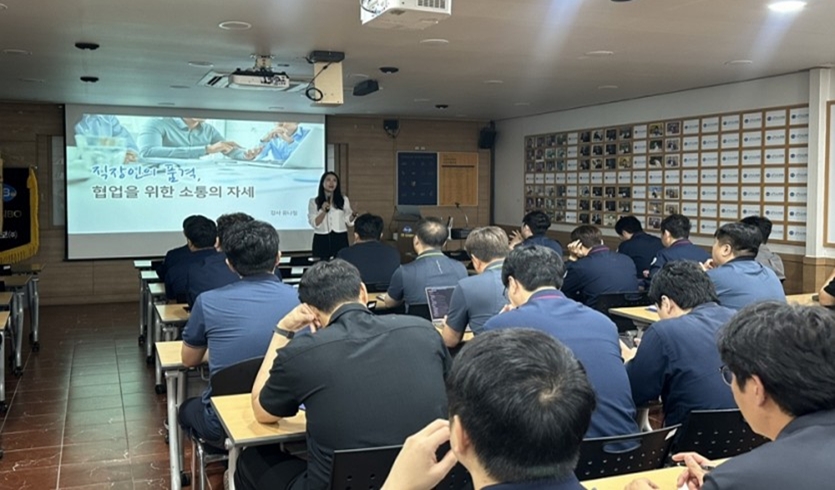
SB Seonbo held its September Morning Special Lecture on September 10 and 17 at Dadae Plant 1 and Gupyeong Plant.
The lecture, titled “Professional Workplace Etiquette: Communication for Effective Collaboration”, was led by Yoo Na-jung of Sutopia HR Consulting. The session covered the importance of communication, common obstacles, practical ways to communicate with professionalism, and techniques to enhance communication effectiveness.
Through the lecture, SB Seonbo employees deepened their understanding of professional and respectful communication, learning practical methods to foster trust and build a collaborative organizational culture.
Why is Communication Important?
• Professionalism goes beyond simple politeness: It stems from attitude and character in approaching work.
• Sustainable organizational growth requires collaboration: Achieving results depends on effective teamwork.
• Collaboration depends on communication skills: Respectful and professional communication is the foundation.
Workplace “Communication Pitfalls”
• Common workplace “ailments” to avoid: Monday Blues, Boss Syndrome, Work Aversion, Yes-Man Syndrome, YouTuber Syndrome, Self-First Syndrome, Overly Easygoing Attitude, “I’m the Good Kid” Syndrome, etc.
• Causes of negative communication: cognitive biases, organizational culture, and online anonymity (e.g., Blind app) that promote negative thoughts and behaviors.
• Impact of negative communication: spreading unverified information or targeting individuals destroys trust and creates a vicious cycle for both individuals and organizations. The solution: be a positive influence first, fostering a workplace where good communication thrives.
Practical Tips for Professional Communication
• Avoid automatic responses: Speak consciously rather than habitually, fostering thoughtful dialogue.
• Recognize communication prerequisites: Goal-oriented, results-focused, role-centered, collaboration-based, and mutual respect.
• Use Nonviolent Communication (NVC): Convey your thoughts and feelings without blaming the other person.
• Four steps: Observation (objective fact) → Feeling (my emotion) → Need (my desire) → Request (specific action)
• Practice refusal skills: Express empathy for the other party’s request, explain your own situation honestly, and propose alternatives.
•Empathy and positive interpretation: Consider the other person’s perspective and interpret situations positively—this is essential for healthy communication.
Through this lecture, SB Seonbo employees were reminded that professional, respectful, and conscious communication is the cornerstone of collaboration, trust, and a thriving organizational culture.